

One website for your blog, podcast, newsletter and social.
Your work is spread across a newsletter tool, a podcast host, YouTube and a few social apps. We build one site that pulls all of it in, so every post, episode, issue and video has a page you own.
2.3xOct 2024 to Oct 2026)
Publishers and brands we build and run sites for



What does a publisher’s website need to do?
A publisher’s website is the one place that holds everything the brand makes: articles, podcast episodes, newsletter issues, videos and social posts. Each piece gets its own page on a domain the publisher owns, so the whole archive can be searched, linked and found in Google and AI answers.
Blog and news
Articles your writers publish themselves, with drafts, scheduling and an SEO checklist.
Podcast
A page for every episode, grouped by show, with the player and the people in it.
Newsletter
Every issue kept as a page on your domain, where it keeps getting found.
Video
Each video on its own page next to the story it belongs to.
Social
Your latest posts shown on the site and linked back to the original.
Search and AI answers
Clean structure and schema on every page, so Google and AI assistants can read it.
Why publishers need one website for every channel.
- 01
Every channel is its own island
Newsletter readers never see the podcast. Listeners never see the articles.
- 02
The back catalog is invisible
Last year’s best issue sits in an email archive nobody can search and Google cannot read.
- 03
You are building on rented ground
The platform decides who sees a post. A page on your own domain is yours and keeps being found.
Media website examples. Every channel has a home.
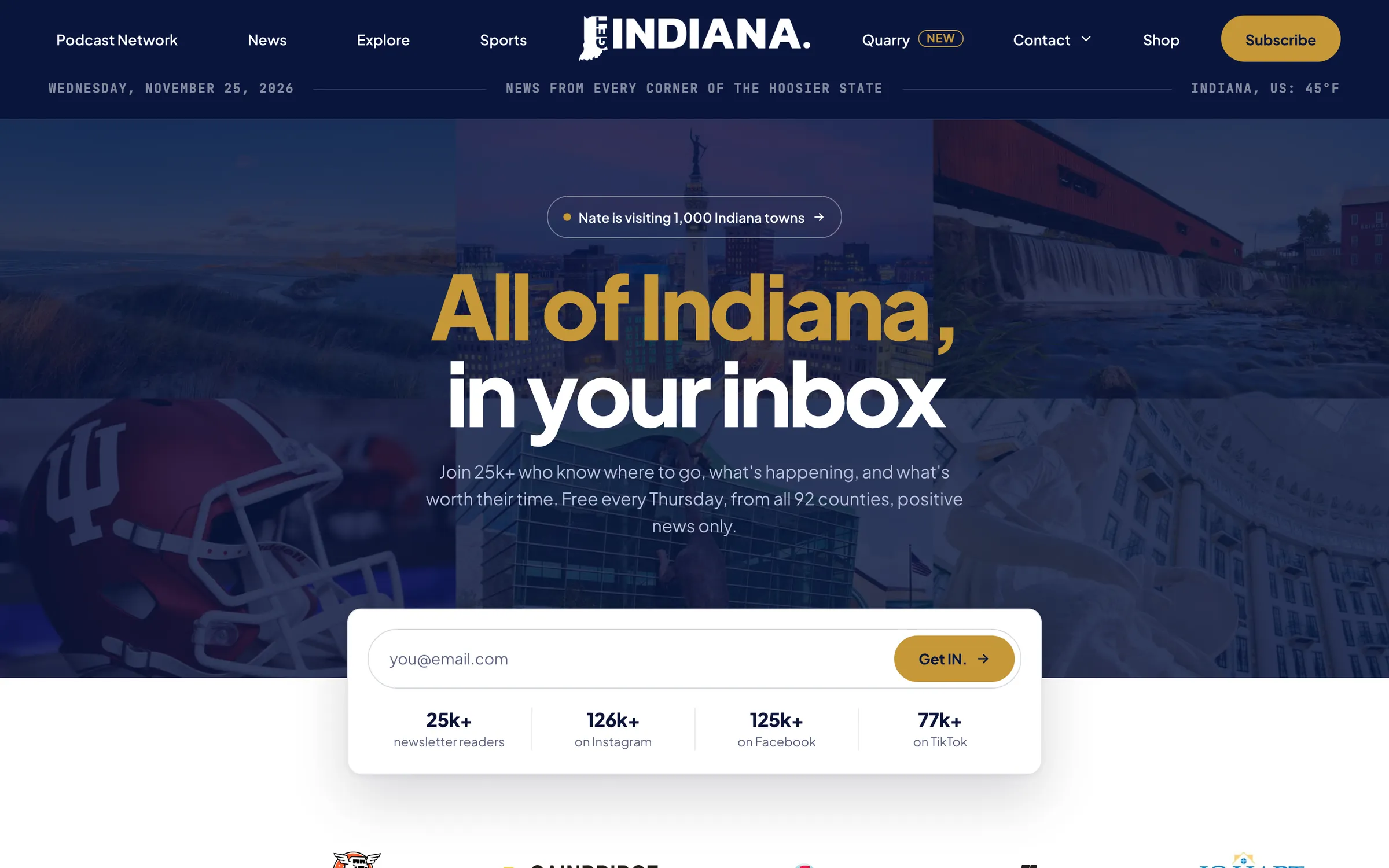
 Get IndianaNews
Stories by topic and region.
Articles the team publishes daily, sorted into topic and region pages built from the same content.
See it live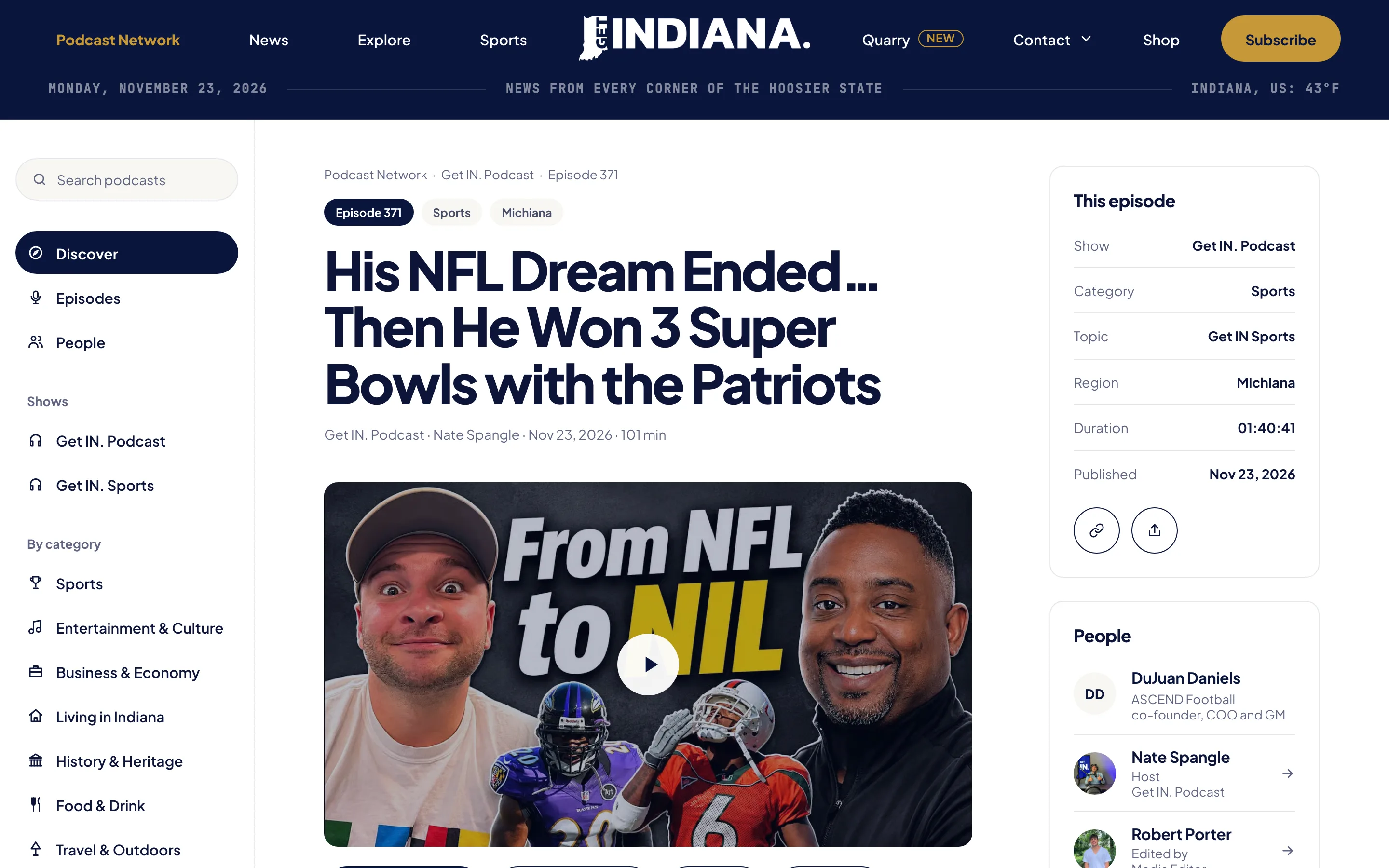 Get IndianaPodcast
A page for every episode.
The player, the notes and the people in the episode, on a page that ranks for the guest’s name.
See it live Roots Realty Co.Newsletter archive
Three newsletters, one archive.
Every issue the team has sent, each one a page on its own domain.
See it live The District ChurchVideo
Each sermon, with its video.
Every week’s video gets a page with the series it belongs to.
See it live
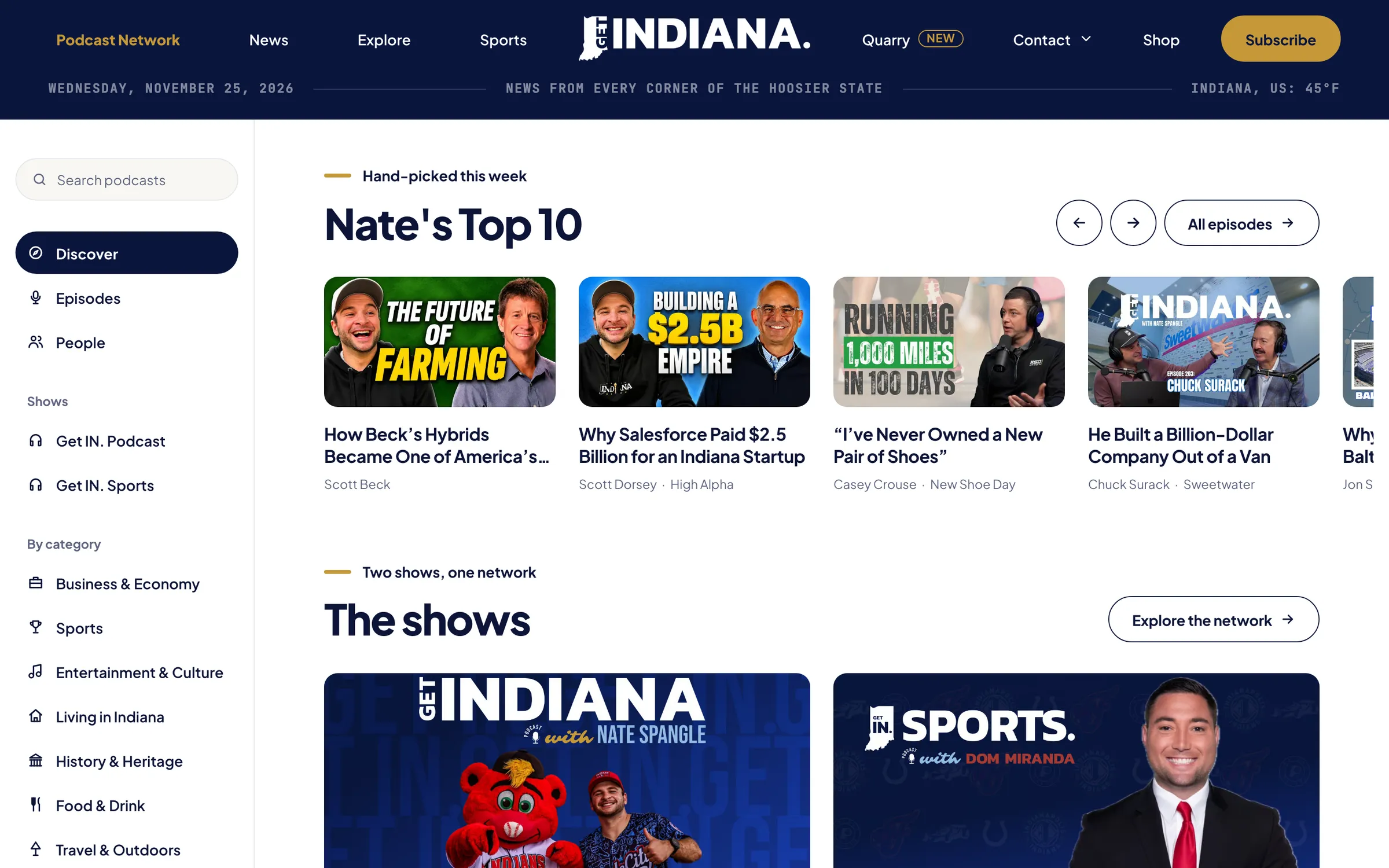
A news site, two podcasts and a newsletter, on one domain.
Get Indiana publishes stories, podcast episodes and a newsletter. Every episode and every issue has its own page on getindiana.com next to the articles, grouped by show, topic and region.
Get Indiana, since the site became the home for all of it.
From Google Analytics and the content system.
Your writers and editors run it. No developer in the loop.
Drafts, scheduling, an SEO checklist and a publish button. A finished piece is on the site within seconds.
Write it once. It shows up everywhere.
One post updates the website, the newsletter and your Google Business Profile, so nobody copies and pastes the same news three times.
Nothing gets lost.
Every change saves as you type and every version is kept, so a closed tab never costs anyone their work.
Schedule it for Friday at 9.
Pick a time in your own time zone. Dots on the calendar show what else is already going out.
Writers draft. Editors publish.
Roles keep each person on the right step, and the review queue shows what is waiting on whom.
Search checks before you publish.
Every page gets a score with the fixes listed in plain words, for Google and for AI answers.
You keep publishing where you already do.
Nobody on your team copies an issue into a web page or re-uploads an episode. Each tool stays where it is, and the site gives every new piece a home.
- No change to how you send, record or post.
- Old issues and episodes are imported, so the archive is complete on day one.
- One search and one set of topic pages across everything.
Five steps, and you always know which one you’re on.
- 01
A short call
We learn the business and the goal. Thirty minutes, no pitch deck.
- 02
A fixed-price proposal
Written scope and price before you commit to anything.
- 03
Design and build
Progress you can see throughout, not a reveal at the end.
- 04
Launch, checked
Redirects, Search Console and analytics checked on the live site.
- 05Optional
The Stack
Ongoing work through our monthly partnership, if and when you want it.
Publishing sites we run.
We publish an episode or newsletter and it's on the site and updating our Google Business Profile instantly. They built us a scraper that flags trending Indiana news so we know what to cover next. Super speedy and innovative.
Build what you need now. Keep improving it when it makes sense.
A defined system, scoped and shipped.
A website, an automation system, an AI workflow, or a connected combination of all three.
- Fixed price and written scope
- 50% deposit, 50% upon completion
- Progress visible throughout the project
- Two-business-day response standard
- Everything belongs to you when it ships
Pricing is based on the project.
Start a projectAn ongoing technology partnership.
We stay involved after launch to improve the system, introduce useful capabilities, and help the technology evolve with the business.
- Automation and workflow refinement
- AI prompt and system iteration
- Tool evaluation and migration
- New capabilities as the business needs them
- Quarterly strategic planning
Three engagement levels, sized to your operation.
Talk about The StackFAQ.
The questions worth answering before a call. If yours isn’t here, ask on the form.
Ask a questionNo. You keep sending and recording where you do now. The site picks up each new issue and episode and gives it a page on your domain.
Yes. We import the back catalog so the archive is complete on day one, and we keep old links working with redirects.
Yes. The site can show your latest Instagram posts and link each one back to the original, so the page stays current without anyone updating it.
Your team. Writers and editors work in the CMS, with drafts, scheduling and an SEO checklist, and a published piece is on the site within seconds.
It is the main reason to do it. Each piece gets its own page with clean structure and the right schema, which is what search engines and AI assistants read.
Projects are fixed-price and based on scope. You get a written proposal after the first conversation, before you commit to anything.
Make your technology work like one system.
Tell us what’s working, what isn’t, and what you think the business needs next. We’ll help you find the right place to start.